Best Grant Management Software for 2026
Compare grant management platforms for nonprofits, foundations, governments and grant-funded organizations—from finding opportunities and tracking applications to managing awards, compliance, reporting and multi-program portfolios.
Grant management software compared
| Software | Strong use case | Primary emphasis |
|---|---|---|
| Instrumentl | Nonprofits and grant-seeking teams | Discovery, matching, tracking and funder research |
| AmpliFund | Grant-funded organizations and public-sector programs | Full grant lifecycle and post-award management |
| eCivis | Government and public-sector grant programs | Grant research, administration and compliance |
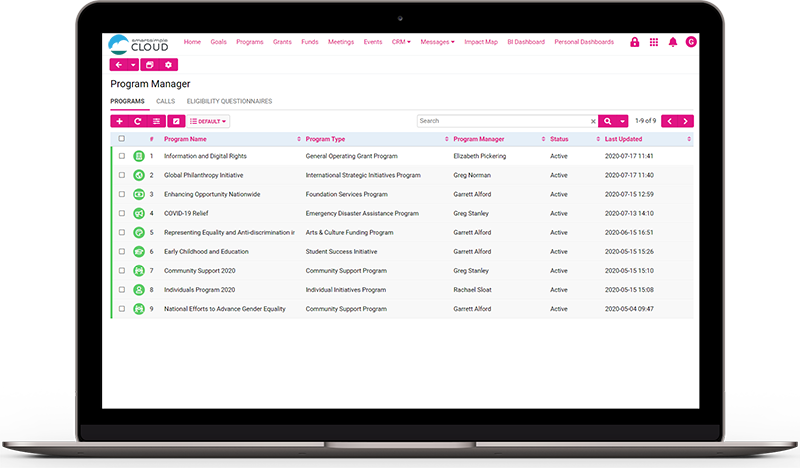
| SmartSimple Cloud | Complex grantmakers and configurable programs | Grantmaking, workflows, portals and reporting |
| GrantHub | Nonprofit grant-seeking teams | Application and deadline tracking |
| GrantStation | Organizations researching funding opportunities | Grant and funder research |
Instrumentl
Instrumentl combines funder research, opportunity matching and grant tracking. Its workflow is oriented toward organizations actively seeking grants: teams can identify potential funders, research fit, organize prospects and keep applications and deadlines visible rather than maintaining separate research spreadsheets and calendars.
AmpliFund
AmpliFund is designed around grant lifecycle management rather than just prospect research. It supports workflows spanning pre-award and post-award activity, including applications, awards, performance, financial tracking and reporting. That makes it more relevant when compliance and administration after an award are substantial parts of the workload.
eCivis
eCivis is particularly associated with public-sector grants. Its platform addresses grant research and the administrative lifecycle, with workflows intended to help government organizations coordinate funding opportunities, applications, awards, compliance and reporting across departments.
SmartSimple Cloud
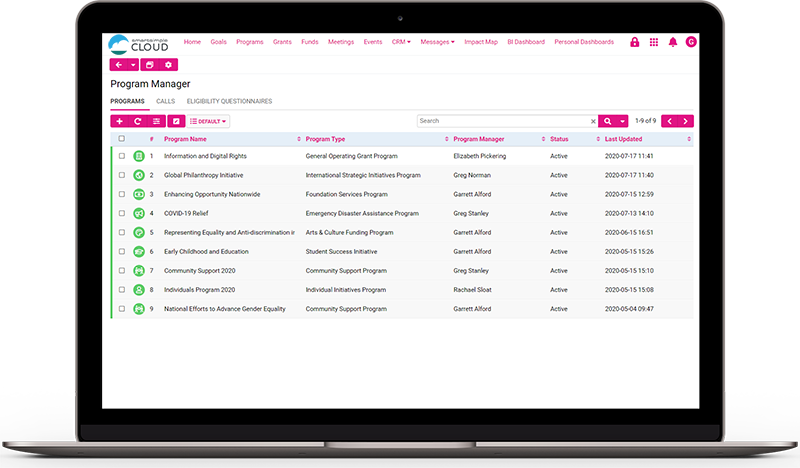
SmartSimple Cloud serves organizations that need highly configurable grantmaking processes, applicant portals, reviews, approvals, reporting and program workflows. It is especially relevant when the software needs to conform to an established grant program rather than forcing every program into a simple standardized process.
GrantHub
GrantHub is focused on helping nonprofit grant seekers organize opportunities, applications, tasks, documents and deadlines. It can replace fragmented spreadsheets and calendars with a shared grant pipeline, making it relevant to organizations that already know where to look for funding but need a more disciplined process for managing applications.
GrantStation
GrantStation is primarily a funding-research resource. Organizations use it to identify potential grantmakers and funding opportunities rather than as a full post-award grant administration system. It therefore belongs in the buying conversation when the main challenge is finding funders, but it should be evaluated differently from lifecycle-management platforms.
How to choose grant management software
Start by mapping the grant lifecycle your organization actually owns. A nonprofit seeking funding may need prospect research, a grant calendar, reusable documents and application collaboration. A government agency receiving and administering awards may care more about budgets, compliance, reporting and audit trails. A foundation distributing grants needs applicant portals, review committees, award workflows and grantee reporting.
Next, estimate the number of active grants, programs, users and external participants. Look closely at permissions, document management, configurable fields, reminders, reporting, financial integrations and audit history. For complex programs, implementation and data migration can matter as much as the feature list.
Grant management features worth evaluating
- Grant and funder discovery
- Opportunity and application pipelines
- Deadline and task tracking
- Document and proposal management
- Pre-award and post-award workflows
- Budget and financial tracking
- Compliance and audit trails
- Performance and outcome reporting
- Applicant or grantee portals
- Review and approval workflows
- Role-based permissions
- CRM, accounting and finance integrations
Frequently asked questions
What is grant management software?
Grant management software organizes work across some or all of the grant lifecycle. Depending on the product, that can include finding opportunities, managing applications, administering awards, tracking budgets and compliance, collecting reports or running a grantmaking program.
What is the difference between grant management and grant tracking software?
Grant tracking software usually emphasizes deadlines, applications, tasks and award status. Grant management platforms can go further into financial management, compliance, reporting, applicant portals and full pre- and post-award workflows.
Can grant management software help find grants?
Some products can. Instrumentl and GrantStation emphasize funding discovery and funder research, while other platforms focus primarily on administering grants once opportunities or awards already exist.
Do nonprofits need grant management software?
Not every nonprofit does. The value increases as the number of prospects, applications, active awards, reporting deadlines and collaborators becomes difficult to manage reliably with spreadsheets and calendars.
What should government organizations look for?
Public-sector teams should pay particular attention to compliance, audit history, permissions, financial controls, reporting, department-level workflows and support for the funding programs they administer.
Research note: Product positioning and capabilities were reviewed against current vendor information in October 2026. Pricing and packaging can change; enterprise-oriented platforms may require a vendor quote.